
Your Stride / Our Blog
Welcome to the DAVINA ELLIS RUNNING COACH BLOG, where we dive deep into the world of running. Explore expert running advice from Performance Running Coach Davina Ellis. Discover practical guidance on training, running technique, biomechanics, footwear selection, running clothing, nutrition, hydration, race preparation and injury prevention. Learn about alternative approaches to recovering from injury, returning to running safely and making informed decisions that support long-term performance. Whether you're a beginner or an experienced runner, every article is designed to help you run stronger, smarter and Beyond The Ordinary.
15th June 2026
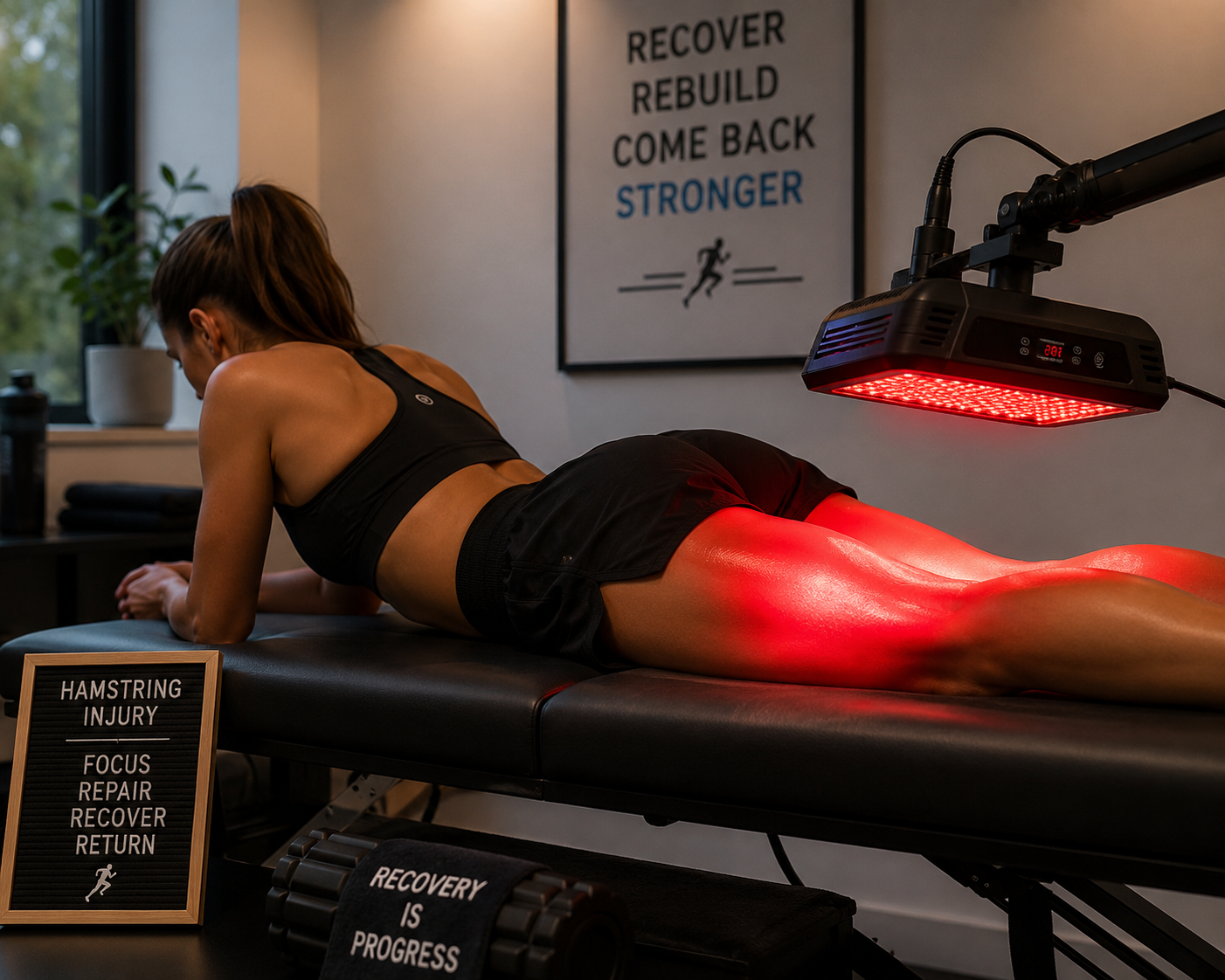
Red Light Therapy for Injury Recovery: What Does the Science Say?
Recovering from an injury can be a challenging and often frustrating process. Whether you're dealing with a muscle strain, tendon injury, joint pain or simply the demands of regular training, finding safe and effective ways to support recovery is a priority for many athletes. One treatment that has gained increasing attention in recent years is red light therapy, also known as photobiomodulation (PBM).
But How Effective Is It, And What Does The Research Tell Us?
READ ARTICLE ➡️
What Is Red Light Therapy?
Red light therapy uses specific wavelengths of red and near-infrared light to stimulate the body's natural healing processes. Unlike ultraviolet (UV) light, which can damage the skin, red light penetrates deeper into the tissues without causing harm when used appropriately.
The treatment is non-invasive, painless and typically involves exposing the affected area to a specialised light source for a prescribed period of time.
How Does It Work?
Inside every cell are tiny structures called mitochondria, often referred to as the "powerhouses" of the cell. These produce adenosine triphosphate (ATP), the energy required for cells to function and repair damaged tissue.
Research suggests that red and near-infrared light may stimulate mitochondrial activity, increasing ATP production and supporting the body's natural healing response. Scientists also believe it may:
- Reduce inflammation.
- Improve blood circulation.
- Encourage collagen production.
- Support tissue repair.
- Reduce oxidative stress.
- Promote healthy cellular function.
While these effects are promising, they depend on factors such as the wavelength of light, treatment duration, intensity and the type of injury being treated.
Potential Benefits for Athletes
Red light therapy has been studied across a range of sports and rehabilitation settings. Current research suggests it may help:
- Reduce muscle soreness after exercise.
- Improve recovery between training sessions.
- Support healing of muscle strains and soft tissue injuries.
- Assist recovery from some tendon injuries.
- Reduce pain associated with certain musculoskeletal conditions.
- Improve overall tissue recovery following intense exercise.
Many athletes also use red light therapy as part of their regular recovery routine to help manage the demands of training.
What About Bone Injuries?
There is growing interest in the potential role of red light therapy in supporting bone healing. Early research suggests it may influence the activity of cells involved in bone formation and repair.
Although these findings are encouraging, more high-quality clinical studies are needed before firm conclusions can be made. For conditions such as stress fractures or other bone stress injuries, established medical management, appropriate rest and a gradual return to activity remain the most important aspects of recovery.
Is It a Miracle Cure?
No.
While red light therapy may offer benefits, it should be viewed as a complementary treatment rather than a replacement for evidence-based rehabilitation.
Successful recovery still depends on identifying and addressing the underlying cause of the injury. This may involve appropriate strength training, improving movement quality, managing training load, allowing sufficient recovery, optimising nutrition and following a structured rehabilitation programme.
Red light therapy may help support these processes, but it cannot replace them.
Is It Safe?
When used according to the manufacturer's instructions, red light therapy is generally considered safe and well tolerated. It does not involve harmful radiation and is non-invasive.
As with any treatment, it is important to use certified equipment and seek advice from a qualified healthcare professional if you have an underlying medical condition, are pregnant, or are taking medications that increase sensitivity to light.
The Bottom Line
Red light therapy is an exciting and rapidly developing area of sports medicine. Research suggests it may help reduce pain, support tissue repair and improve recovery from certain musculoskeletal injuries, particularly when used alongside a well-designed rehabilitation programme.
While it is not a quick fix, it may provide an additional tool to support recovery and help athletes return to training with greater confidence.
As research continues to evolve, red light therapy is likely to play an increasingly important role in sports recovery. Combined with sensible training, effective rehabilitation, good nutrition and adequate rest, it has the potential to become a valuable part of a comprehensive approach to injury management.

18th May 2026
Why Warming Up and Cooling Down Are Essential for Running Performance and Recovery
Whether you're preparing for a 5K, marathon or simply heading out for an easy training run, the time you spend before and after your run can have a significant impact on your performance, recovery and long-term progress.
Unfortunately, warming up and cooling down are often the first parts of a training session to be skipped. When time is limited, it's tempting to head straight out the door or stop the moment the run is complete. However, these two phases of training play an important role in preparing your body for exercise and supporting recovery afterwards.
Why Is a Warm-Up So Important?

READ ARTICLE ➡️
A warm-up prepares your body and mind for the demands of running. Rather than shocking the body with an immediate increase in intensity, a gradual warm-up allows your cardiovascular, muscular and nervous systems to transition smoothly into exercise.
An effective warm-up helps to:
- Increase blood flow to the working muscles.
- Raise muscle temperature, making muscles more elastic and efficient.
- Improve joint mobility and range of movement.
- Activate the nervous system, improving coordination and reaction time.
- Prepare the cardiovascular system for increased demand.
- Improve focus and mental readiness.
When muscles are warm, they contract more efficiently, helping you produce force with less effort. This can improve running economy, allowing you to run faster while using less energy.
Performance Starts Before the First Mile
Many runners judge their performance by the first few miles of a run. If those miles feel heavy or sluggish, it is often because the body hasn't had sufficient time to prepare.
A structured warm-up allows you to reach your target pace more comfortably and efficiently. Rather than spending the first part of your run trying to find your rhythm, your body is already primed for the session ahead.
This becomes even more important before:
- Interval training
- Hill sessions
- Tempo runs
- Races
- Speed work
Higher intensity sessions place greater demands on the muscles, tendons and cardiovascular system, making a thorough warm-up essential.
The Role of Cooling Down
Cooling down is just as important as warming up, yet it often receives far less attention.
Rather than stopping abruptly after a hard effort, gradually reducing your pace allows your heart rate and breathing to return towards resting levels in a controlled manner.
Cooling down helps to:
- Promote circulation.
- Assist the removal of metabolic by-products.
- Reduce dizziness following intense exercise.
- Begin the recovery process.
- Allow the body to transition back to a resting state.
Although cooling down won't eliminate muscle soreness, it forms an important part of an overall recovery strategy.
Supporting Recovery
Recovery begins the moment your run finishes.
A structured cool-down provides an opportunity to support recovery by:
- Walking or jogging easily for five to ten minutes.
- Performing gentle mobility exercises.
- Rehydrating.
- Consuming appropriate nutrition after longer or harder sessions.
- Assessing how the session felt and identifying any areas of tightness or discomfort.
Taking just a few extra minutes after each run can help you recover more effectively and prepare for your next training session.
The Mental Benefits
Warm-ups and cool-downs aren't only physical—they also help prepare and reset your mind.
A warm-up provides time to focus on the session ahead, reinforce your pacing strategy and establish a positive mindset before training or racing.
Similarly, a cool-down offers an opportunity to reflect on the session, evaluate what went well and identify any lessons for future training.
Developing this routine encourages consistency and helps build confidence over time.
Common Mistakes
Many runners unknowingly reduce the quality of their training by:
- Starting hard from the first step.
- Skipping dynamic preparation before speed sessions.
- Finishing a hard run and stopping immediately.
- Neglecting recovery after difficult workouts.
- Rushing through training due to lack of time.
Small improvements in preparation and recovery can accumulate into significant performance gains over weeks and months.
The Bigger Picture
Running performance isn't determined solely by how hard you train. It's influenced by how well you prepare, how intelligently you recover and how consistently you look after your body.
A well-planned warm-up helps you perform at your best by preparing your muscles, joints and cardiovascular system for the demands of running. An effective cool-down supports recovery, helping your body adapt to training and preparing you for your next session.
Together, these simple but often overlooked habits can improve performance, reduce the risk of injury and make every training session more productive.

17th April 2026
Fuel Your Run: Hydration and Nutrition Strategies for Peak Performance
Every runner has experienced it—that moment when the legs begin to feel heavy, the pace starts to slow, and the energy simply isn't there. While training plays a significant role in performance, one of the most overlooked factors is how well you fuel and hydrate your body.
Proper nutrition and hydration don't just improve performance on race day; they support every aspect of your training, from recovery and adaptation to reducing fatigue and maintaining long-term health. Whether you're preparing for a 5K or an ultramarathon, understanding how to fuel your body can make the difference between simply finishing and performing at your best.
Why Nutrition Matters!

READ ARTICLE ➡️
Running places significant demands on the body. Every training session requires energy, and that energy comes primarily from the food you eat.
Carbohydrates are your body's preferred source of fuel during moderate to high-intensity exercise. They are stored as glycogen in your muscles and liver, providing readily available energy during training and racing.
Protein is equally important, helping to repair damaged muscle fibres and support recovery after exercise. Healthy fats contribute to long-duration energy production, hormone regulation and overall health, while vitamins and minerals support countless physiological processes involved in performance and recovery.
A balanced diet allows your body to:
- Train consistently.
- Recover more efficiently.
- Build strength and endurance.
- Reduce the risk of illness and injury.
- Maintain healthy energy levels.
- Optimise adaptation to training.
The Importance of Hydration
Water plays a vital role in almost every function within the body.
Even mild dehydration can affect performance by increasing heart rate, reducing endurance, impairing concentration and making exercise feel significantly harder than it should.
Sweating is the body's natural cooling mechanism, but it also results in the loss of fluids and electrolytes, particularly sodium. Replacing these losses is essential, especially during longer training sessions or in warm weather.
Signs of dehydration may include:
- Increased thirst.
- Dark-coloured urine.
- Headaches.
- Fatigue.
- Muscle cramps.
- Reduced performance.
- Difficulty concentrating.
Maintaining good hydration throughout the day is often more effective than trying to drink large amounts immediately before a run.
What Should You Eat Before Running?
Pre-run nutrition should provide readily available energy without causing digestive discomfort.
For most runners, eating one to four hours before training allows sufficient time for digestion. Meals should focus on easily digestible carbohydrates with moderate amounts of protein and minimal fat and fibre, particularly before harder sessions.
Examples include:
- Porridge with banana and honey.
- Toast with peanut butter and sliced banana.
- Rice with eggs.
- A bagel with jam.
- Greek yoghurt with fruit.
- Overnight oats.
If you're running early in the morning and don't have time for a full meal, a banana, energy bar or slice of toast may provide enough energy for shorter sessions.
Fuel During Your Run
Not every run requires additional nutrition.
For runs lasting less than around 60 minutes at an easy pace, water is usually sufficient for most runners.
However, longer runs, harder workouts and races often require carbohydrate intake during exercise to help maintain blood glucose levels and delay fatigue.
Sports nutrition research generally recommends consuming carbohydrates during prolonged exercise, particularly when running beyond 90 minutes. Many runners achieve this through:
- Energy gels.
- Chews.
- Sports drinks.
- Energy bars.
- Real foods such as bananas or dried fruit, depending on the duration and intensity.
It's important to practise your race-day nutrition during training. Never try a new product for the first time during an important event.
Hydration During Running
Fluid requirements vary considerably depending on:
- Temperature.
- Humidity.
- Running intensity.
- Individual sweat rate.
- Body size.
There is no one-size-fits-all approach.
During longer runs, drinking small amounts regularly is generally more effective than waiting until you feel very thirsty.
For runs lasting more than one to two hours, drinks containing electrolytes can help replace sodium lost through sweat and support fluid absorption.
Recovery Nutrition
Recovery begins as soon as you finish your run.
Following longer or harder sessions, the body needs both carbohydrates to replenish glycogen stores and protein to repair muscle tissue.
Eating within the first hour after exercise can help support recovery, although the total quality of your daily nutrition remains the most important factor.
Good recovery options include:
- Greek yoghurt with berries and granola.
- Chicken with rice and vegetables.
- Eggs on wholegrain toast.
- A fruit smoothie with protein.
- Cottage cheese with fruit.
- A balanced meal containing carbohydrates, protein and vegetables.
Rehydrating is equally important. Water may be sufficient after shorter runs, while electrolyte-containing drinks may be beneficial after prolonged sessions or heavy sweating.
Common Nutrition Mistakes
Many runners unknowingly limit their performance through poor fuelling habits.
Common mistakes include:
- Running long distances without enough carbohydrate intake.
- Starting sessions dehydrated.
- Under-fuelling while trying to lose weight.
- Skipping recovery meals.
- Trying unfamiliar nutrition on race day.
- Ignoring hydration during hot weather.
These habits can reduce training quality, slow recovery and increase the risk of illness, injury and overtraining.
Individual Needs Matter
No two runners are the same.
Age, body size, training volume, race distance, environmental conditions and personal goals all influence nutritional requirements. What works perfectly for one athlete may not suit another.
Developing an individual fuelling strategy takes time, experimentation and consistency. Training sessions provide the ideal opportunity to discover what foods and drinks work best for your body before race day.
The Bigger Picture
Nutrition and hydration are not simply about avoiding hunger or thirst—they are essential components of successful training.
Every meal, every drink and every recovery snack contributes to your body's ability to adapt, recover and perform. Consistently fuelling your body appropriately allows you to train harder, recover faster and maximise the benefits of every session.
Final Thoughts
The strongest performances are built on more than miles alone.
A well-planned training programme, combined with intelligent hydration and nutrition strategies, provides the foundation for long-term progress. By giving your body the fuel and fluids it needs before, during and after each run, you'll improve your energy levels, support recovery and give yourself the best possible opportunity to perform at your full potential.
Remember, your training doesn't begin when you lace up your running shoes—it begins with how well you prepare your body to meet the demands ahead.

9th February 2026
The Right Running Gear: Equipping Yourself for Success
For experienced runners, the right running gear can make all the difference. Discover how strategic gear choices can enhance comfort, prevent injury, and boost your race-day performance.
READ ARTICLE ➡️
Success in running isn't determined by expensive equipment alone, but having the right gear can make a significant difference to your comfort, performance and enjoyment. Whether you're training for your first 5K or preparing for a marathon, investing in appropriate running gear can help you train more effectively, reduce the risk of injury and allow you to perform at your best.
The key is not to buy the most expensive products, but to choose equipment that suits your individual needs, running style and training goals.
Technical Clothing
The clothing you wear can have a greater impact than many runners realise.
Modern technical fabrics are designed to wick moisture away from the skin, helping regulate body temperature and keeping you comfortable throughout your run.
Cotton clothing tends to absorb sweat, becoming heavy and increasing the risk of chafing.
Choosing lightweight, breathable clothing designed specifically for running can make training far more enjoyable, particularly during longer sessions.
Dress appropriately for the weather, remembering that your body will warm up quickly once you begin running. In colder conditions, layering allows you to regulate your temperature as you exercise.
The Importance of Proper Socks
Running socks are often overlooked but can greatly improve comfort.
Specialist running socks are designed to:
- Reduce friction.
- Minimise blister formation.
- Improve moisture management.
- Provide additional cushioning where needed.
Small improvements in comfort can make a significant difference over longer distances.
Sports Bras
For female runners, a well-fitted sports bra is essential.
Research has shown that excessive breast movement can cause discomfort, alter running mechanics and negatively affect performance. A supportive sports bra designed specifically for running helps minimise movement, improve comfort and allows you to focus entirely on your training.
As with running shoes, fit is crucial. Different levels of support are available depending on body shape and activity level. Some are even fitted with a pocket for Gels!
GPS Running Watches
Technology has transformed the way runners train.
GPS watches allow athletes to monitor:
- Pace.
- Distance.
- Heart rate.
- Cadence.
- Elevation.
- Training load.
- Recovery.
- Sleep (on many devices).
These insights help coaches and athletes train with greater precision and make informed decisions about pacing and recovery.
However, it's important to remember that data should support your training—not control it. Learning to listen to your body's signals remains just as valuable as monitoring the numbers on your watch.
Hydration and Fuel Carrying Systems
As training distances increase, so does the importance of staying fuelled and hydrated.
Hydration vests, handheld bottles & running belts allow you to carry:
- Water.
- Electrolyte drinks.
- Energy gels.
- Nutrition.
- Mobile phone.
- Keys.
- Emergency essentials.
Being properly prepared allows you to focus on your run without worrying about where your next drink or Gel will come from.
Safety Equipment
Running safely should always be a priority.
Depending on when and where you run, consider carrying or wearing:
- Reflective clothing.
- High-visibility accessories.
- A head torch for early morning or evening runs.
- Identification.
- A fully charged mobile phone.
Being visible to other road users significantly improves safety in low-light conditions.
Accessories That Can Enhance Your Running
Several accessories can improve both comfort and performance, including:
- Anti-chafing balm
- Compression sleeves or socks
- Race day shorts or Racing pants with pockets for Gels
While none of these are essential for every runner, many become valuable additions as training volume increases.
Don't Chase Equipment Alone
It's easy to believe that the latest shoes, smartwatch or piece of technology will automatically make you a faster runner.
In reality, the greatest improvements come from consistent training, intelligent coaching and gradual progression.
Quality equipment enhances your running experience, but it cannot replace dedication, patience and a well-structured training plan.
Finding What Works for You
Every runner is different.
What feels comfortable for one athlete may not suit another. The best approach is to gradually build your running kit over time, choosing products that genuinely improve your comfort, confidence and performance rather than simply following trends.
Invest in the essentials first—well-fitting shoes, technical clothing and appropriate safety gear—before adding accessories that support your individual goals.

12th January 2026
Running Shoes: Your Most Important Investment & How Advanced Gait Analysis Can Assist With Smarter, Faster Running
Understanding and improving your running gait is crucial when selecting a new pair of running shoes. The right pair can improve your performance and help injury prevention. Our blog explores advanced gait analysis techniques, helping experienced runners identify subtle inefficiencies and make impactful adjustments.
READ ARTICLE ➡️
If there is one piece of equipment worth investing in, it's a quality pair of running shoes.
Every runner has a unique running gait, foot shape and biomechanics. Wearing shoes that provide the appropriate level of cushioning, support and fit can improve comfort and reduce unnecessary stress on the body.
When choosing running shoes, consider:
- Your running style and biomechanics.
- The type of terrain you run on.
- Your weekly mileage.
- Your training goals.
- Comfort above all else.
Rather than selecting shoes based solely on appearance or brand, visit a specialist running retailer where trained staff can assess your needs and recommend suitable options.
Remember that running shoes have a lifespan. Most will need replacing after approximately 300–500 miles (480–800 km), although this varies depending on the shoe, running surface and individual runner.
Beyond the Basics: Advanced Gait Analysis for Smarter, Faster Running
As runners become more experienced, improving performance is rarely about simply running more miles. The biggest gains often come from refining the finer details of how you move. Small inefficiencies in running technique may seem insignificant, but over thousands of strides they can influence running economy, speed, fatigue and even injury risk.
This is where advanced gait analysis becomes invaluable.
Rather than focusing solely on how your feet strike the ground, modern gait analysis examines the entire movement chain, providing detailed insight into how your body produces and controls movement. By identifying subtle biomechanical inefficiencies, experienced runners can make targeted improvements that translate into meaningful performance gains.
What Is Advanced Gait Analysis?
Advanced gait analysis is the detailed assessment of a runner's movement patterns while running. Using high-speed video analysis, observational assessment and performance metrics, coaches can evaluate how efficiently the body moves from head to toe.
Unlike a simple shoe-fitting assessment, advanced gait analysis looks at the interaction between posture, joint movement, muscle function and running mechanics.
It seeks to answer questions such as:
- Are you using energy efficiently?
- Is one side of your body working harder than the other?
- Are movement patterns placing unnecessary stress on certain tissues?
- Could subtle technique adjustments improve performance?
- Are there compensations caused by weakness, fatigue or previous injury?
The goal is not to create a "perfect" running style, but to optimise movement for your individual body and running goals.
Why Small Changes Can Make a Big Difference
Running is an incredibly repetitive activity.
A runner covering a marathon will typically take between 35,000 and 55,000 steps depending on stride length. Even a minor inefficiency repeated thousands of times can increase energy expenditure or place unnecessary stress on muscles, tendons and joints.
Improving running economy by just a few percent may allow you to:
- Maintain your pace for longer.
- Delay fatigue.
- Reduce unnecessary muscular effort.
- Improve race performance.
- Lower the risk of overuse injuries.
These are often the marginal gains that separate good performances from personal bests.